Partners who scaled with us
Among the ONLYOFFICE 16th Anniversary series, there are posts of our story that focus on product releases, version numbers, and feature lists. That version exists, and it is a good one. But there is another version, the one about the people and organizations who decided to build alongside us, and what happened when they did. This article is about that.

Sixteen years in, ONLYOFFICE works with 335 partners across nearly 100 countries. Not all of them started with us. Many of them took a chance on an early integration, figured out what it could do, and kept going. Some of them helped us understand what the product needed to become. A few of them proved something important: that open-source collaboration tools, when they work well together, can reach places and people that no single company could reach alone. Here are three of those stories.
PowerFolder, where it started to scale
When PowerFolder (dal33t GmbH), a Düsseldorf-based enterprise sync-and-share company, came to us in 2016, we were still proving what the ONLYOFFICE Integration Edition could do. PowerFolder was already a trusted name in German higher education; thousands of companies and the majority of German universities were using their platform to store and share data securely.
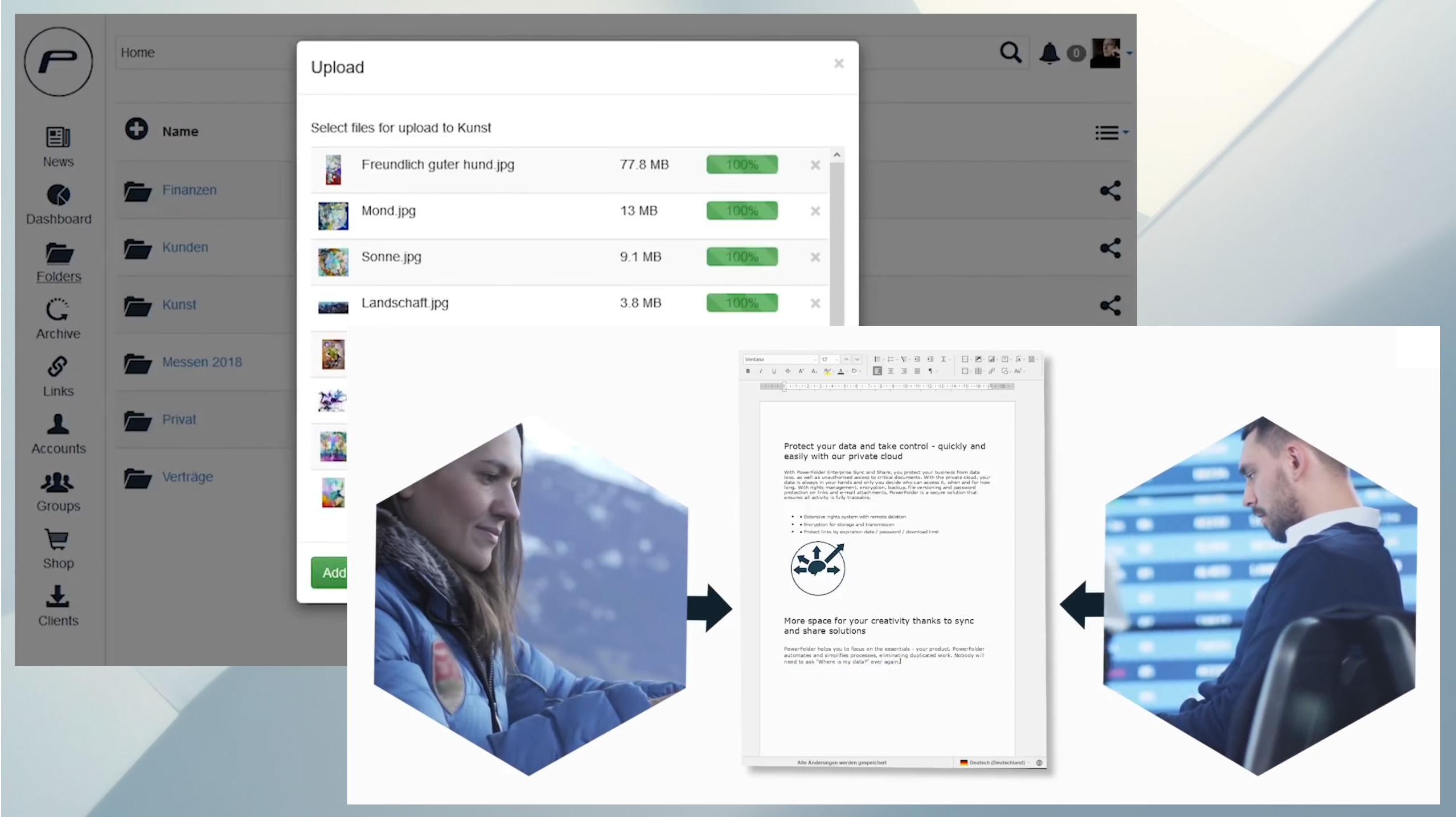 Image credits: PowerFolder
After an intensive evaluation period, the PowerFolder team chose to integrate ONLYOFFICE Document Editors directly into their sync-and-share solution. The reasoning was clear: they needed full Microsoft Office format compatibility, and they needed it to work inside their existing interface without asking users to install anything locally. The result of that decision moved quickly from pilot to production.
In 2017, the Karlsruhe Institute of Technology (KIT), one of the largest research universities in engineering and natural sciences in Europe, and an institution with around 9,300 employees and 25,000 students, completed its own testing phase and deployed ONLYOFFICE as part of bwSync&Share, the nationwide online storage service it operates for all higher education institutions across the German state of Baden-Württemberg.
From that point forward, every student and employee of the higher education institutions across Baden-Württemberg, plus the University of Rostock, could open, edit, and co-author documents, spreadsheets, and presentations directly in their browser, no local installation required, changes visible in real time, each contributor’s work shown in a different color.
That deployment reached hundreds of thousands of users. It proved something we had suspected but needed to see at scale: that when a sync-and-share platform and a document editor are built to work together from the ground up, the experience is different. Not just technically, but in practice. People actually use it.
PowerFolder was one of the first to prove that the Integration Edition model worked. Their annual Congress in Düsseldorf became a place where the ONLYOFFICE team met their customers directly, heard the questions, and understood what to build next. That kind of feedback loop is not something you get from documentation alone.
ownCloud, a partnership built in public
By 2017, ONLYOFFICE editors had already been available within ownCloud through a community-built connector. People were using the combination; it showed up in support threads, in user forums, in feedback we received. The demand was there before any formal arrangement.
When ownCloud, at the time one of the world’s leading open-source enterprise file sync-and-share platforms, with 200,000 installations and more than 25 million users, and ONLYOFFICE formalized their partnership in 2018, it was less a new beginning than a recognition of something already in motion.
Joerg Eberwein, then Head of Partners & Alliances at ownCloud, put it plainly: the combination gave teams the ability to access and edit Microsoft Office formats from the ownCloud front end in real time, to exchange work safely and to collaborate efficiently on documents, while maintaining full control over sensitive corporate data. Version conflicts, conflict files, long approval cycles, gone.
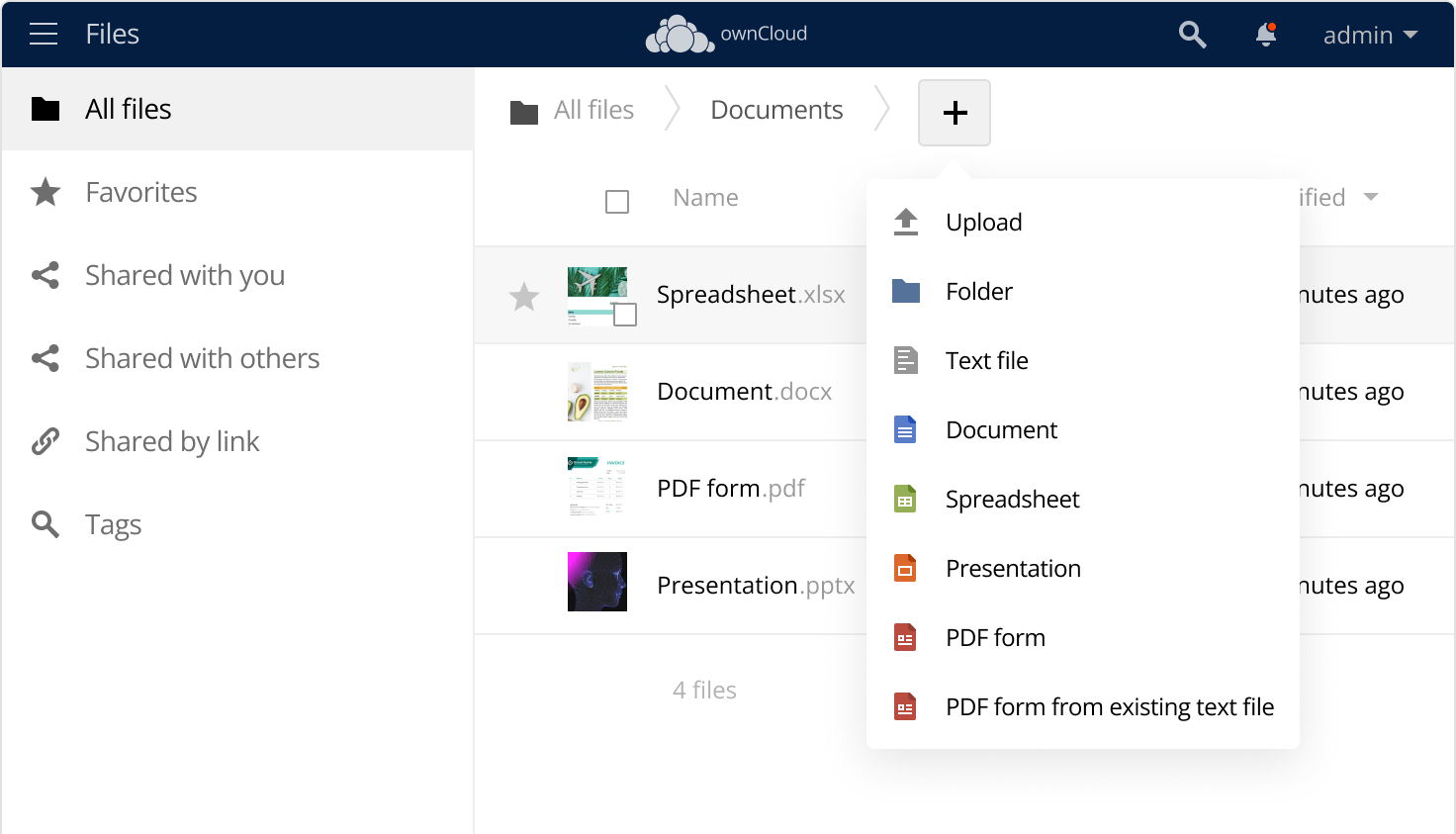
The partnership deepened continuously over the years that followed. Each ONLYOFFICE – ownCloud connector update brought new capabilities: ODF format support, Mail Merge, improved version history visualization, broader permission settings, including review, comment, and fill-forms permissions, that matched what enterprise customers actually needed. The two teams worked at a technical level, not just at a marketing level. You can trace the trajectory in the connector release notes.
What the ownCloud partnership showed us was that formal cooperation changes the quality of the work. Not because good intentions became official, but because shared responsibility produces cleaner integration. When both teams have skin in the game, the edge cases get fixed.
 Photo credits: University of Münster
The Münster University sciebo deployment, a research cloud used by the academic community, became one of the clearest examples of this combination at work: open-source infrastructure, institutional data security requirements, and collaborative document editing all in one place, maintained and supported by two organizations that had agreed to stand behind it together.
 Photo credits: Česká televize
Czech Television later replaced both Google Docs and Microsoft Office with the ownCloud and ONLYOFFICE combination. Research institutions, professional organizations, and teams across industries made the same choice for the same basic reasons: control, compatibility, and a working product.
SMC, building for real people, solving real problems
SMC Treviso S.R.L. is an Italian open-source company. They found ONLYOFFICE while looking for a way to bring browser-based document editing into the Liferay content management ecosystem. Liferay had a strong footprint in enterprise portals, but editing documents natively inside it required a solution that the Liferay marketplace did not yet have.
SMC built that solution. Their connector, developed by their own engineering team, made it possible to create, edit, and co-author documents inside the Liferay Document and Media Library, directly in the browser, with no additional installation for end users. That connector is still listed on the ONLYOFFICE connectors page today.
The partnership, which began around 2016, became visible internationally when SMC organized the Liferay Boot Camp, an event held in Rome in May 2019 that brought together over 240 participants, including Liferay partners, developers, contributors, and the Italian open-source community. The ONLYOFFICE team presented there as guests of SMC, talking about the technology behind the editors, the open API, and the collaborative features. The room was full of people who were building things.
One of those things was a project SMC had developed called Open Square Spaces, a collaborative workspace platform built on Liferay with ONLYOFFICE integrated, designed specifically for Italian users to manage content, communicate across departments, and work on documents from any device.
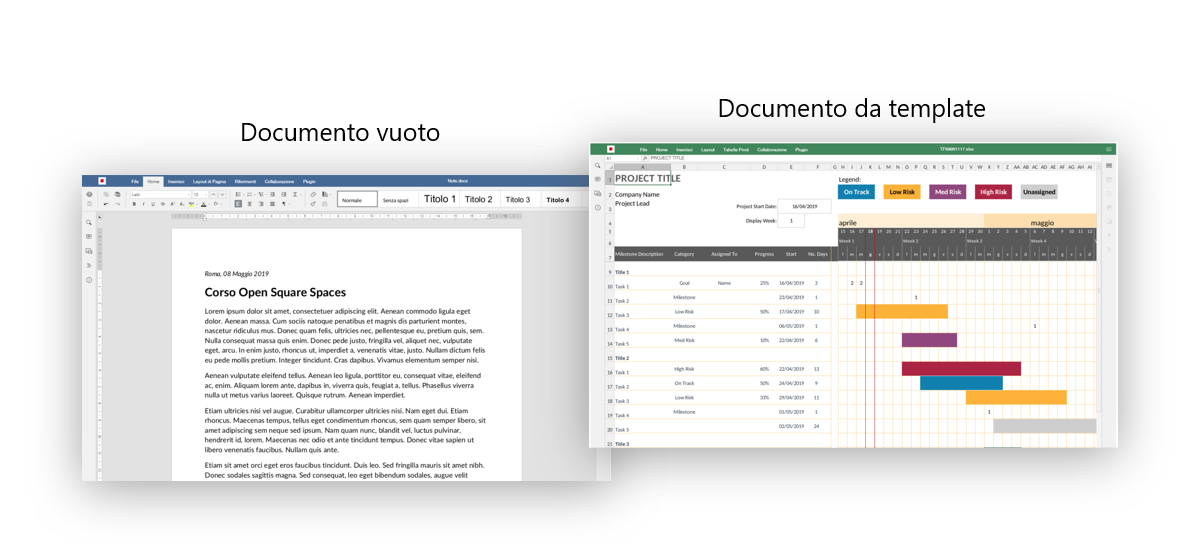 Image credits: SMC Treviso
When the COVID-19 pandemic arrived in 2020 and remote work became an immediate necessity for organizations across Italy, SMC and IBM responded by making Open Square Spaces available on IBM Cloud free of charge. ONLYOFFICE joined that initiative. The platform gave Italian companies and organizations a ready-to-use remote collaboration environment, quickly, at no cost, when it was needed.
That moment illustrated something about what a long-term partnership actually means: it is not just a business arrangement. It is a shared capacity to respond. SMC had built something useful with ONLYOFFICE technology, and when the situation called for it, they deployed it for people who needed it. The tools were already there because the work had been done years earlier.
SMC’s engagement has continued since. They presented their partner use case at the launch event for ONLYOFFICE Docs 7.3 in 2023, alongside the product updates, speaking directly to users about how the integration works in practice.
What these three stories have in common
PowerFolder went to the universities of Baden-Württemberg, Rostock, and beyond. ownCloud reached 25 million users and brought institutional-grade data control to organizations that needed it. SMC built a connector for a community that didn’t have one, then used it to help businesses stay connected during a global disruption.
In each case, the pattern is the same: a partner identified something their users needed, built toward it with ONLYOFFICE technology, and created something that neither organization could have built alone.
That is what we mean when we talk about growing together. Not a logo on a partner page, but organizations that share a direction, build on each other’s work, and end up somewhere neither expected at the start.
Sixteen years in, the network that has formed around ONLYOFFICE, 335 partners, nearly 100 countries, hundreds of real-world deployments across education, enterprise, research, public administration, and civil society, is the clearest evidence of what this approach produces. If you’d like to become a part of the story, submit your partnership request here or write to us at partners@onlyoffice.com.
This article is part of the ONLYOFFICE 16th anniversary series: 16 articles tracing the journey from TeamLab in 2009 to the platform used by millions today. Keep on reading!
Create your free ONLYOFFICE account
View, edit and collaborate on docs, sheets, slides, forms, and PDF files online.